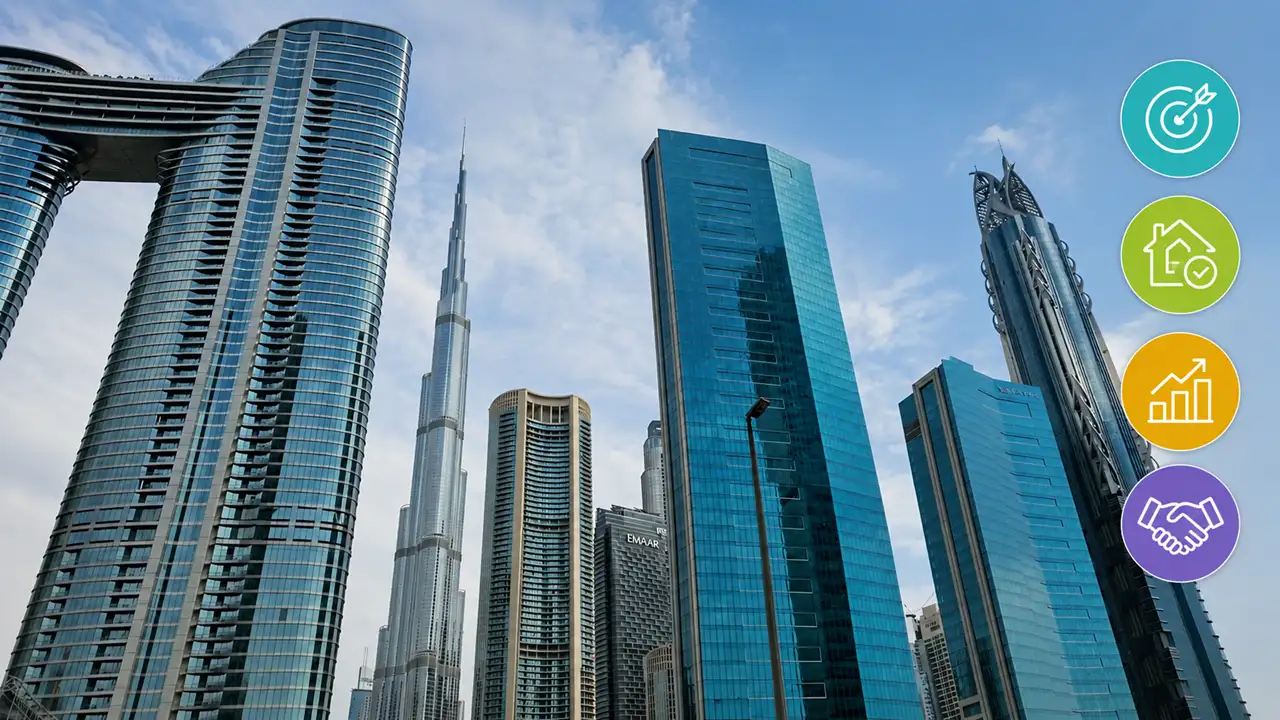
Step 1 · Buying Process Guide
Choose the Right Property in Dubai
How to Evaluate Dubai Real Estate Investments Based on Budget, Strategy, and Market Demand
Choosing the right property in Dubai starts with your objective, full budget, and holding period, then the developer, location, unit, and payment plan. This guide covers the seven factors I check before any reservation.
Direct advisor access. Every buying question answered personally, never by a call center.
Start With the Brief
Important Things Investors Should Consider
Choosing well is the first step in buying property in Dubai, and it starts long before a brochure or a site visit. I open every search with the brief: what the property has to do for you, what it will really cost, and how long you plan to hold it.
Get these answers right and the shortlist almost writes itself. Skip them and even a well-built unit in a good tower can turn out to be the wrong purchase for your goals.

Your objective: rental income, capital growth, personal use, or Golden Visa
A budget that includes the price, the 4% DLD fee, agency fees, and service charges
Off-plan project or ready property
Your risk tolerance and construction timeline expectations
Rental strategy: long-term rental, short-term rental, or appreciation
Holding period: short-term, mid-term, or long-term
Payment structure: cash purchase, mortgage, or developer payment plan
The 4% Dubai Land Department fee is the cost first budgets most often leave out. On an off-plan purchase it is typically paid at the registration stage explained in my guide to Oqood registration in Dubai.
Developer and Project
Evaluate the Developer and Project Credibility
A strong location cannot rescue a weak developer. Before any unit is on the table, I check who is building it, whether the project is registered, and exactly where your money will be held during construction.
Delivery History
Research the developer's delivery history and reputation in the Dubai real estate market, and review the projects it has already delivered.
DLD Registration
Verify that the project is registered with the Dubai Land Department before you make any payment.
Escrow Account
Confirm the project has a valid escrow account for investor protection, and make every payment to that official project escrow account.
Construction Timeline
Check the construction timeline and the expected handover date against the payment plan you are being offered.
Financial Strength
Analyze the developer's financial strength and market credibility, because both decide how a project weathers a slower market.
Location and Community
Analyze Location and Community Potential
Location decides two things at once: how the home feels to live in and how easily it rents and resells. I read a community on its access, its daily infrastructure, and what its master plan says it will become over the next decade.

Proximity to major highways, metro stations, and business districts
Nearby schools, hospitals, and retail centers
The long-term master plan of the community
Future infrastructure and government development plans
Current rental demand and occupancy rates
Lifestyle features such as parks, waterfronts, and amenities
How the location compares with competing communities in Dubai
Compare locations before you compare units. The interactive Dubai real estate map lets you browse Dubai areas and communities and Dubai projects side by side and see exactly where each development sits.
Property Type and Unit
Review Property Type and Unit Selection
Two units in the same tower can perform very differently. Size, layout, floor, and view decide who rents the unit and what they will pay, so I measure every option against demand in that community rather than against the brochure.
Property type matched to your goal: studio, apartment, townhouse, or villa
Unit sizes with strong rental demand in the community
Layout efficiency and usable space
Floor level, views, and orientation
Building amenities and lifestyle facilities
Service charges relative to size and facilities
Price compared with similar units in the same community

Analyze Payment Plans and Financial Commitments
An off-plan payment plan is a schedule you will be meeting for years, so it has to fit your cash flow as comfortably as it fits the price.
The booking amount and initial down payment
The payment schedule during construction
The amount due at handover
Whether a post-handover payment plan is available
Payment deadlines and installment structure
Every payment made to the official escrow account
A plan that fits your financial capacity and investment timeline
Weighing two or three units and their payment plans? Ask me to compare your shortlist on WhatsApp
Rental Income
Understand Rental Income and Return Potential
Gross yield is the figure in the advert; net return is the figure that reaches you. I work out the second one before a client commits, because service charges and yearly maintenance close the gap faster than most buyers expect.
Key Factors to Review
Rental demand in the community
Average rental prices for similar units
Tenant profile in the area: families, professionals, or tourists
Service charges and yearly maintenance costs
Potential for long-term or short-term rental
Expected net return after expenses
Future price growth and resale demand in the location
Studios and one-bedroom apartments typically generate higher rental yields because they are more affordable and attract a wide tenant pool, while larger units and villas tend to trade some yield for stronger long-term appreciation.
Exit Strategy
Plan Your Exit Strategy
The best time to plan a sale is before you buy. Liquidity, future supply, and the depth of buyer demand for your exact unit type decide how quickly you can exit, and at what price, when the time comes.
Resale demand for the property type in the community
Market liquidity and resale transaction activity
Completion timeline and future supply in the area
Buyer demand for similar properties
Potential capital appreciation during the holding period
Ease of resale for the chosen size and layout
Long-term attractiveness of the location and community
Once the shortlist is settled, the reservation comes next: how priority allocation works at a launch is set out in my guide to the Expression of Interest (EOI) in Dubai, and the binding contract that follows in the Sales and Purchase Agreement (SPA). Payments, protection, and the Golden Visa are covered across my Dubai real estate guide library.
FAQs
Choosing Property in Dubai Frequently Asked Questions
The most important factor is selecting a property that matches your investment goal. Investors should consider their budget, investment strategy, expected returns, and holding period.
Both options have advantages depending on the investor's strategy. Off-plan properties often offer lower entry prices and flexible payment plans, while ready properties can generate rental income immediately.
The developer is one of the most important factors. Investors should research the developer's delivery history, reputation, and financial strength, and confirm the project is registered with the Dubai Land Department with a valid escrow account.
In addition to the property price, investors should account for the 4% Dubai Land Department fee, trustee office fees, agency fees where they apply, and service charges.
Studios and one-bedroom apartments typically generate higher rental yields because they are more affordable and attract a wide tenant pool. Larger units and villas tend to offer stronger long-term appreciation.
Location directly impacts rental demand, resale value, and price growth. Properties in well-developed communities with good transport links, infrastructure, and amenities usually attract stronger demand.
Yes. Investors should always evaluate how easy it will be to sell the property in the future. Property size, location, future supply, and buyer demand all affect resale potential.

Your Advisor
Tohid Fetrat
For any questions about your real estate investment, message or call me directly. You will always reach me personally, never a call center or sales team.